 "The quest for riches darkens the sense of right
and wrong."
-Antiphanes - Greek Dramatist
Overview
A hero’s journey is often defined by helpful acts
towards others. The hero sees these acts of
kindness as personal missions, or quests, that
allow him to demonstrate his courage,
commitment, and fortitude.
This week you will begin that voyage by starting in-game questing. Choose a favorite quest
you're currently on or take on a new quest. Analyze it. Who are the characters/organizations involved? What's the overall goal? Why does the NPC want you to do this (motivations)? Is there a moral choice involved? What's the reward?
When analyzing a quest, it is important to realize that they often exhibit the same elements of fiction you use to study literature: character, setting, plot, conflict, point of view, and theme. You
can review these at
- Character - The characters are the "people" in the story who carry out the action.
- Setting - The setting is the location of the action.
- Plot - The plot is the actual story including structure - beginning, middle, and end. Characters act witin the structure of the story. The plot helps the reader to follow along as the action of the story unfolds.
- Conflict - Every story has a conflict to solve. The plot reveals the conflict or problem describes how characters behave to resolve the problem. The climax is the
most exciting part of the plot. The climax leads up to the resolution, it is called the climax.
- Point of View - A point of view is how someone considers something. In a story, as in life, different characters see things differently based on their role in the story, their understaning of the problem, and the experiences and beliefs they bring to the situation.
- Theme - The theme is the central idea of the story that the author is trying to share with the reader.
After completing your analysis, it is time for you to create your own quest and help your peers with
their quests. Will your courage fail you, or will you rise to the challenge?
CHALLENGES FOR THIS QUEST
1. Adventures in Azeroth (This challenge is worth up to 100 XP.)
By the end of the week, you should complete at least 20 in-game quests. Once you have done
this, open your achievement window, find your stats for total quests completed, and show your
instructor.
2. Hero's Journal - A Real Life Quest (This challenge is worth up to 100 XP.)
Azeroth isn't the only place you will find quests. Think of a real life quest that you have
experienced and reflect on it in your journal. Were you successful in completing your task? What
was your reward? Remember, not all quests have extrinsic (physical) rewards.
Hero's Journal
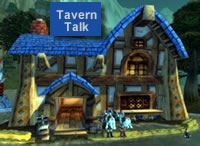
3. Tavern Talk - Quest Analysis (This challenge is worth up to 100 XP.)
Describe one quest that you chose from the game. Who are the NPC's? What is the purpose of the
quest? What rewards will you receive for completing the quest? What challenge/conflict will you
overcome to complete the quest? What is the setting of the quest? How long did it take you to
complete the quest? Tavern Talk Forum
4. Lore and Legend Literature Circle - Chapter 5 - (This challenge is woth up to 100 XP.)
Ensure that you complete all required steps of the Literature Circle this week, and complete a Literature Circle Evaluation form for each member of your group. Submit the completed forms to your Lorekeeper.
While reading this week, contemplate the following essential questions:
- How do the decisions and actions of characters reveal their personalities?
- How can a person's decisions and actions change his/her life?
Answer the following question in text box:
- How does Bilbo's conflict with Gollum relate to your modern understanding of competition?
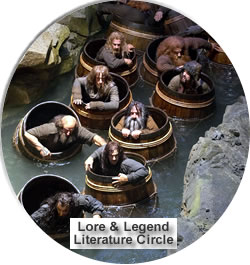
Lore & Legend Literature Circle
QUEST 5: COMMON CORE STANDARDS ADDRESSED
English Language Arts Standards » Reading: Literature » Grades 11-12
Key Ideas and Details
2. Determine two or more themes or central ideas of a text and analyze their development over the course of the text, including how they interact and build on one another to produce a complex account; provide an objective summary of the text.
Craft and Structure
4. Determine the meaning of words and phrases as they are used in the text, including figurative and connotative meanings; analyze the impact of specific word choices on meaning and tone, including words with multiple meanings or language that is particularly fresh, engaging, or beautiful. (Include Shakespeare as well as other authors.) (Hero's Journal - The Path Ahead)
END OF QUEST 5